If you want to swim faster, stronger, and more efficiently, simply swimming laps may not be enough. Competitive swimmers and serious fitness enthusiasts often use specialized training tools to increase resistance in the water. Two of the most effective tools are swimming resistance bands and drag parachutes.
Both tools create extra resistance while swimming, forcing your muscles to work harder. Over time, this builds strength, improves stroke efficiency, and increases overall speed when the resistance is removed.
In this article, we’ll explore how these tools work, their benefits, and how to incorporate them into your swim training.
Turn every stroke into a strength-building workout and every lap into progress.
What Are Swimming Resistance Bands?
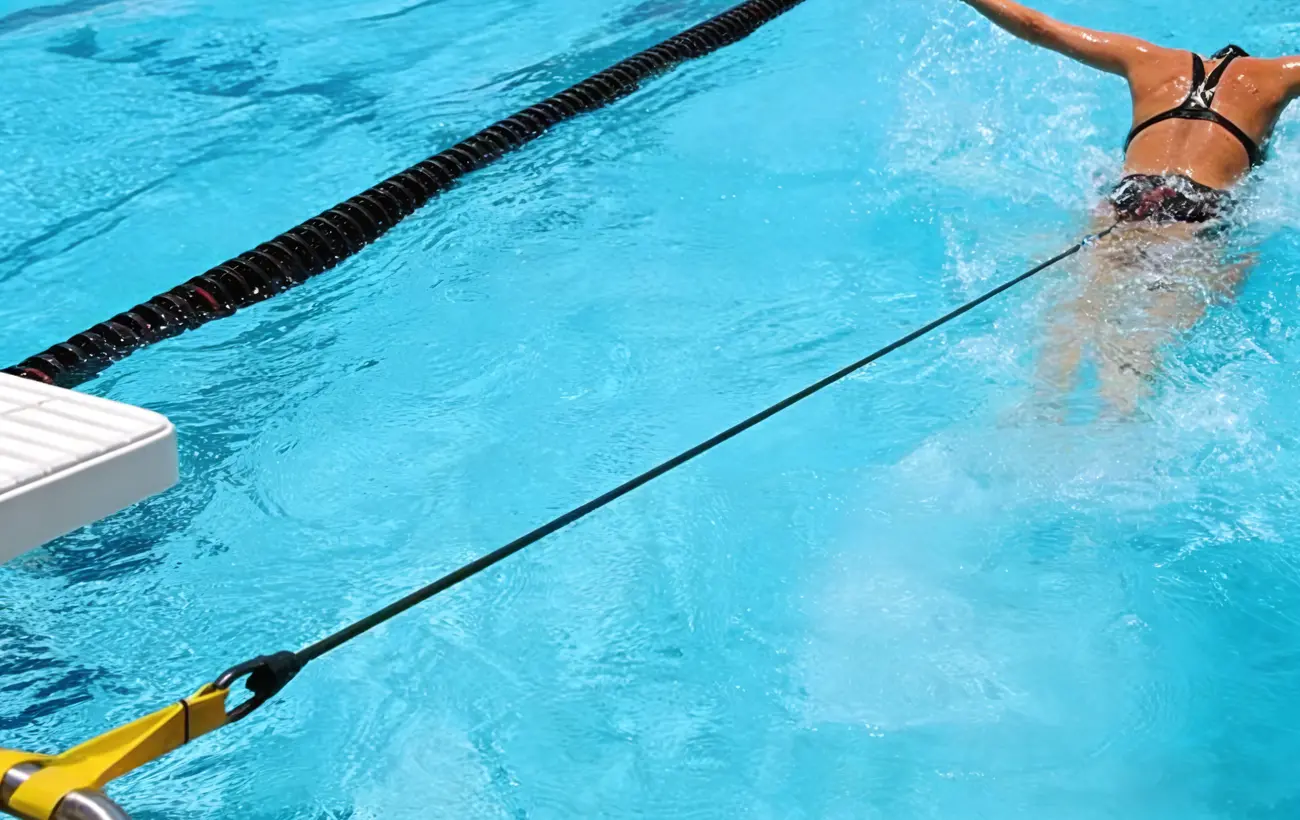
Swimming resistance bands—sometimes called swim tethers—are elastic cords that attach to your waist and anchor to the pool deck or starting block. As you swim forward, the band stretches and creates resistance that pulls you backward.
Instead of swimming across the pool, you essentially swim in place while fighting resistance.
Key Benefits
1. Build Swim-Specific Strength
Resistance bands target the exact muscles used in swimming, including:
Shoulders
Back
Core
Glutes
Legs
This improves your ability to generate stronger strokes.
2. Improve Stroke Technique
Since you’re swimming in place, coaches and swimmers can easily focus on:
Hand entry
Pull path
Body rotation
Kick timing
This makes resistance bands great for technique drills.
3. Safe Strength Training in Water
Unlike heavy gym lifting, resistance bands create smooth, adjustable resistance, reducing injury risk while still building power.
What Is a Swimming Drag Parachute?
A drag parachute is a small parachute attached to your waist with a belt and tether. As you swim forward, the parachute opens underwater and creates drag behind you.
This added resistance forces your body to work harder with every stroke.
What Is a Swimming Drag Parachute?
A drag parachute is a small parachute attached to your waist with a belt and tether. As you swim forward, the parachute opens underwater and creates drag behind you.
This added resistance forces your body to work harder with every stroke.
Benefits of Drag Parachute Training
1. Increase Swimming Power
Drag parachutes increase water resistance, which strengthens the muscles responsible for propulsion.
When you remove the parachute, swimmers often feel lighter and faster in the water.
2. Improve Stroke Efficiency
If your stroke is inefficient, the parachute will exaggerate the drag. This encourages swimmers to maintain:
Better body alignment
Stronger catch phase
Consistent kick rhythm
3. Boost Sprint Speed
Many sprint swimmers use parachutes to train explosive power for short-distance events like:
50m freestyle
100m freestyle
Butterfly sprints
Resistance Bands vs Drag Parachutes
Feature
Resistance Bands
Drag Parachute
Training style
Stationary swimming
Full pool swimming
Resistance type
Elastic tension
Water drag
Best for
Strength & technique
Speed & power
Difficulty level
Adjustable
Moderate to high
Many swimmers actually combine both tools in their training programs.
Final Thoughts
Swimming resistance bands and drag parachutes are powerful tools for swimmers who want to take their training to the next level. By adding controlled resistance in the water, these tools help build strength, refine technique, and increase speed.
Whether you’re a competitive swimmer, triathlete, or fitness swimmer, incorporating resistance training into your swim routine can make a noticeable difference in your performance.
Train with resistance, race without it—and feel the speed.